Specialised Support for children with learning difficulties
Our speech pathology services
Specialised support for kids with Dyslexia, ADHD, Autism Spectrum Disorder and more

Helping children and teens to communicate is our whole reason for being at North Shore Speech Therapy. That’s why we’ve got a team with specialist training to work with kids with diagnosed disorders including Dyslexia, ADHD/ADD, Autism Spectrum Disorder and Global Development Delay.
Our tailored approach means that we shape our therapy to your child, their personality and their unique needs, as well as integrating with other allied health professionals that are part of your support team.
Attention Deficit Hyperactivity Disorder (ADHD) and Attention Deficit Disorder (ADD)
Speech therapists can play a key role in an integrated approach to therapy for building the skills of children with Attention Deficit Hyperactivity Disorder (ADHD) and Attention Deficit Disorder (ADD). This can include support to build concentration skills, processing and understanding information and learning new skills.
Depending on your child’s needs, speech therapy can focus on:

Speech therapist can play a key role in an integrated approach to therapy for building the skills of children
Autism Spectrum Disorder (ASD)
Autistic children experience the world differently to their neurotypical peers. They have a unique way of thinking and processing the world around them and this should be celebrated and encouraged. Here at North Shore Speech Therapy we understand this and want to celebrate your autistic child while giving them life skills. A speech therapist can help with:
- Talking
- Social engagement
- Making and maintaining friendships
- Play skills
Speech therapy can help children with ASD to develop stronger communications skills to better participate in the world around them and therefore interact more confidently with others. Our team includes therapists with specialised training for ASD including the Floortime program.
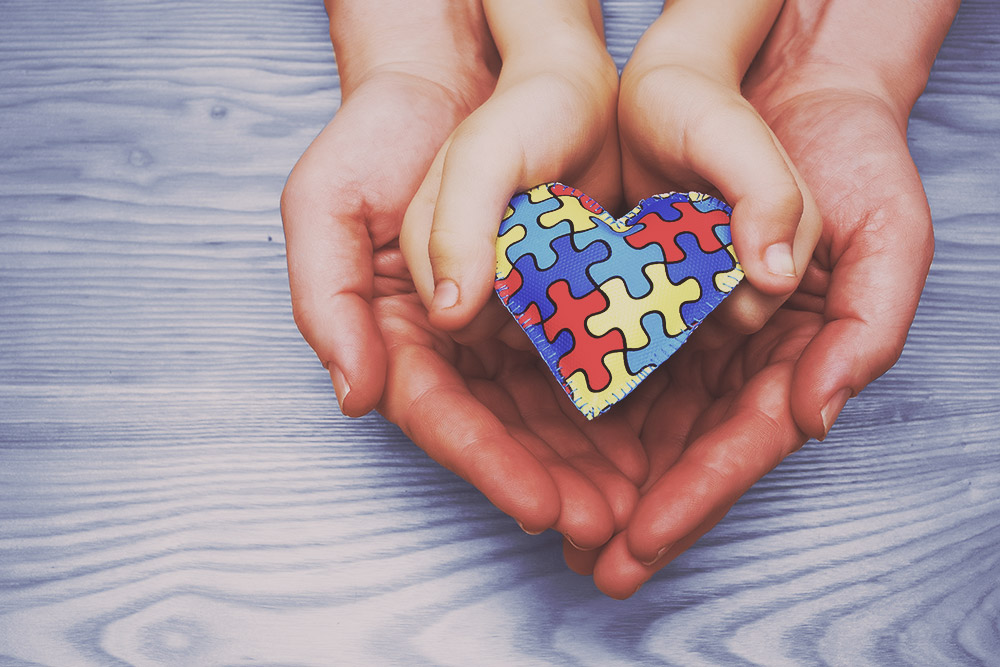
Autistic children have a unique way of thinking and processing the world around them and this should be celebrated and encouraged
Dyslexia
Dyslexia is frequently viewed as a problem with learning to read, but at its core, it’s really a language processing problem. Our therapists can use a holistic approach to diagnose Dyslexia or determine if another issue is impacting your child’s reading. Possible problems include:
- Hearing the sounds within words
- Differentiating similar sounds
- Knowing how to represent these sounds with letters
- Understanding how parts of words impact on spelling and meaning.
These are all functions of language and as language specialists, this is why speech pathologists are perfectly placed to help your child with evidence-based strategies to improve their reading, spelling and comprehension skills.

Our therapists can use a holistic approach to diagnose Dyslexia or determine if another issue is impacting your child's reading.
Global Developmental Delay (GDD) and Developmental and Intellectual Disabilities
Global Developmental Delay (GDD) is a general term used for any delay of 6 months or more in the development of a child between birth and 18 years. Children with GDD often have an associated reduction in communication abilities. That’s where we can help. We work with children with GDD to help them make progress with their speech and language, their understanding and use of verbal language, as well as their play skills and social interactions. As GDD can be complex and impact multiple areas of a child’s life, we also work in collaboration with other service providers to create a tailored plan for your child.
We can work with children with a range of intellectual disabilities and learning disorders. If your child has a diagnosis, we can work collaboratively with other professionals to create the best outcomes for your child. If you are yet to have a clear answer about why your child is struggling, our therapists can use a range of diagnostic tools to help you find some answers and determine the best course of action.
Importantly, we believe the label is not as important as the action we can take in partnership with you and your child to help them make progress and achieve their individual goals

We work with children with GDD to help them make progress with their speech and language, their understanding and use of verbal language, as well as their play skills and social interactions
Our approach to reading difficulties
Speak to us today
Simply call us, or Request a booking
Frequently Asked Questions
Children with autism often have differences in how they communicate, including challenges with social language, understanding nonverbal cues, building conversation skills, and using language flexibly. Speech therapy for children with autism focuses on building functional communication skills, whether through spoken language, gestures, visual supports, or augmentative and alternative communication (AAC) devices. Therapy is tailored to each child’s strengths and communication style, with a focus on meaningful participation in daily life.
Yes. Research suggests that a significant proportion of children with ADHD, often estimated at 35 to 50% in population-based studies, also have language difficulties, including problems with narrative structure, word retrieval, following complex instructions, and social communication. Speech therapy can address these specific language challenges alongside strategies that account for attention and executive function differences. This might include using visual supports, breaking tasks into smaller steps, and incorporating movement into therapy sessions.
Learning difficulty and learning disability are often used interchangeably, along with learning disorder. However, in the Australian school system they have specific meanings. A learning disability, including Specific Learning Disorder (with impairment in reading, also known as dyslexia, or written expression, or mathematics), is a condition that impacts a child’s ability to develop specific academic skills, such as literacy or numeracy skills. Children with learning disorders can make good progress with targeted, evidence-based intervention. Learning difficulties, on the other hand, are factors outside of learning disabilities that might affect a student’s ability to learn, such as a lot of absences from school, ineffective instruction, or personal or family trauma.
Yes. Speech therapy can be very effective for children with dyslexia.
Dyslexia is fundamentally a language-based condition. It affects phonological processing and phonemic awareness, which are the skills children need to hear, remember and manipulate sounds in words. These skills are the foundation for learning to read and spell. As are oral language skills which speech pathologists specialise in.
Speech pathologists are university trained to assess, diagnose and treat these underlying language skills. This means we do not just work on reading accuracy or spelling lists. We look at why reading and spelling are hard in the first place.
For children with dyslexia, therapy typically focuses on:
• phonemic awareness, such as identifying and manipulating individual sounds in words
• phonological processing, including how sounds are stored and retrieved
• sound-letter relationships and spelling patterns
• sounding out skills for reading and spelling
• morphology and spelling rules eg, when adding a suffix that starts with a vowel, drop the final ‘e’ so hike -> hiking
This is done in a structured and individualised way to see each student succeed at their pace.
At North Shore Speech Therapy, we use structured, explicit and multisensory approaches that are matched to how a child’s brain learns. Therapy is targeted, evidence-based and designed to build confidence as well as skill.
When dyslexia is identified early and the right support is put in place, children can make significant progress with reading and spelling and often begin to enjoy learning again.